

Introduction
Kitchens in The Woodlands can often last 20–25 years with quality materials and consistent upkeep. But many homeowners notice problems much earlier—swollen cabinet doors, musty smells under the sink, bubbling paint, warped flooring, and rusting fixtures. A big silent culprit is humidity. The Woodlands’ Gulf moisture, frequent rain, and heavy tree cover create conditions where kitchens fight moisture daily—even when nothing is actively “leaking.” Homeowners dealing with these issues often start by exploring expert kitchen remodel services to upgrade materials and improve long-term durability. For homeowners planning a local renovation project, you can also learn more about kitchen remodeling services in The Woodlands, Texas designed for the region’s humidity and climate conditions.
NOAA climate resources highlight how consistently humid conditions influence building environments across the region (NOAA National Centers for Environmental Information).
In this guide, we’ll break down why kitchens wear out faster in The Woodlands, what materials fail first, and the practical steps that help you prevent expensive repairs. If you’re planning upgrades, it also helps to read our kitchen lifespan guide so you know what “normal wear” vs. “humidity damage” looks like.
If you already see early signs of moisture damage, working with experienced local professionals can make a big difference. Homeowners often start by consulting trusted remodeling contractors in The Woodlands, Texas who understand how humidity, ventilation, and material choices affect long-term durability in homes across the area.
1. How The Woodlands’ Climate Affects Your Kitchen
Even if your kitchen is spotless, the environment is working against your finishes every day. Humid air carries moisture into cabinet boxes, behind appliances, and into grout lines—especially after cooking and dishwashing.
Key climate factors in The Woodlands
- High humidity for much of the year
- Warm temperatures (especially spring through fall)
- Frequent rainfall and storm systems
- Tree shade that can slow drying around the home
The EPA explains how moisture and humidity drive material deterioration and microbial growth indoors (EPA – Mold & Moisture).
In real Woodlands kitchens, that often means:
- Moist air trapped under sinks and inside cabinet bases
- Condensation on cold plumbing lines and metal fixtures
- Slower drying after cooking, mopping, and wiping surfaces
- Higher mold risk in hidden pockets behind appliances
If your kitchen also has limited exhaust, take a look at Kitchen Ventilation 101 because ventilation is usually the first “missing piece” in humidity-heavy homes.
2. Common Humidity-Related Kitchen Problems in The Woodlands
2.1 Swollen & Warped Cabinets
Wood and wood-based panels naturally exchange moisture with the air. In humid conditions, cabinet components can swell, shift, and weaken—especially if the boxes are MDF or particle board. The USDA Wood Handbook documents how wood absorbs moisture and changes dimensionally as humidity rises (USDA Forest Products Laboratory – Wood Handbook (PDF)).
Typical signs include:
- Doors that rub, stick, or won’t close smoothly
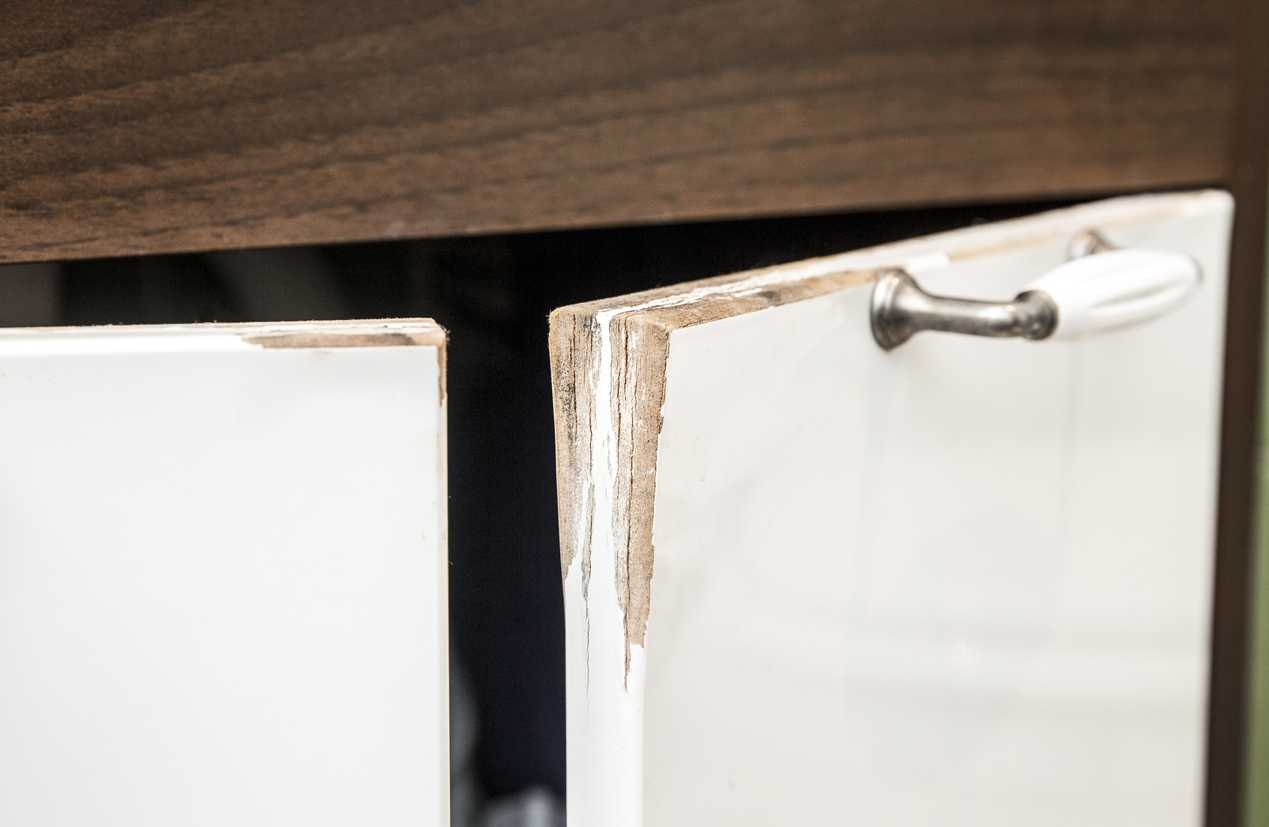
- Swollen edges and rounded corners
- Veneer peeling or bubbling
- Soft cabinet floors under the sink
If you’re comparing cabinet build options for your next upgrade, this breakdown helps: custom cabinets vs stock vs semi-custom.
2.2 Mold Under Sinks & Behind Appliances
Humidity + darkness + dust/wood fibers = ideal conditions for mold, even without a visible leak. The CDC notes mold can grow quickly when moisture is present indoors (CDC – Mold).
Common signs include:
- Musty odor when opening a cabinet
- Dark spotting on caulk lines or cabinet bases
- Recurring irritation that seems worse near the sink area
2.3 Paint, Trim & Backsplash Separation
Persistent humidity can weaken caulk and adhesives over time. When steam lingers—especially without good exhaust—small gaps around splashes and trim become bigger entry points for moisture.
2.4 Grout Discoloration & Tile/Joint Breakdown
Unsealed grout is porous and can darken in humid kitchens. Once moisture sits in grout lines long enough, staining and softening becomes more common—especially near sinks, dishwashers, and entryways. If you want easier daily upkeep choices, see low-maintenance kitchen materials for busy Woodlands families.
2.5 Rusting Hardware & Early Appliance Wear
Humidity speeds up corrosion on hinges, pulls, and exposed metal edges—often showing first under the dishwasher door, around the sink base, or at the range hood seams.
3. Materials That Wear Out Faster in Humid Kitchens
Some materials simply don’t hold up well when humidity is constant and ventilation is inconsistent:
- MDF and particle-board cabinet boxes (especially sink bases)
- Low-grade laminates and thin edge banding
- Standard drywall in wet/steam-prone zones
- Budget hinges/pulls without corrosion resistance
- Unsealed grout and porous tile
If your goal is long-term durability, compare finishes and substrates in: choosing the right materials for humid Texas weather and our 2026 roundup of the most durable kitchen materials for Woodlands homes.
During many remodels, we upgrade key zones to plywood cabinetry, moisture-tolerant backers, sealed grout systems, and hardware that resists corrosion—so the kitchen stays stable as seasons change.
4. Design & Ventilation Mistakes That Accelerate Damage
4.1 Weak Exhaust or Recirculating-Only Range Hoods
If cooking moisture isn’t carried outside, it settles into ceilings, cabinet faces, and wall cavities. In humid climates, that extra indoor moisture compounds the problem fast.
4.2 Tight Appliance Clearances
Crowding fridges, dishwashers, and wall ovens restricts airflow and traps heat + moisture in corners and gaps. Builder-grade layouts often leave just enough space to “fit,” but not enough to breathe.
4.3 No Moisture-Resistant Strategy in Wet Zones
Sink bases, dishwasher walls, fridge water-line zones, and trash pull-outs need moisture-aware detailing: better substrates, sealed seams, correct caulking, and smart venting. When those details are skipped, hidden damage is more likely.
5. How to Prevent Humidity from Destroying Your Kitchen
5.1 Improve Moisture Removal (Ventilation First)
- Use your range hood during cooking and for 10–15 minutes afterward
- Keep cabinet doors open occasionally in the sink base to air it out
- Make sure bathroom exhaust and laundry venting aren’t dumping moisture back indoors
If you suspect the hood is underperforming, the most common fixes (ducting, placement, sizing) are covered in our ventilation guide.
5.2 Choose Moisture-Resistant Materials (Where It Matters Most)
- Plywood cabinetry in high-risk zones (sink base + dishwasher wall)
- Moisture-tolerant backer boards around splashes and wet walls
- Porcelain tile or waterproof LVP flooring
- Rust-resistant hinges, pulls, and fasteners
You can see how moisture-aware material selection and weather-resistant detailing come together in a real-world project in this deck, patio, and outdoor kitchen renovation completed , where surfaces, cabinetry, and finishes were chosen specifically to withstand humidity, rain, and long-term exposure.
5.3 Seal & Protect Key Areas
- Re-caulk sinks, countertops, and backsplashes when you see gaps or shrinkage
- Seal grout (especially on floors and backsplashes) to slow staining and moisture absorption
- Inspect under-sink plumbing twice a year for slow drips and condensation
If your home is older and you want a maintenance rhythm that prevents surprise repairs, read: how to maintain older Woodlands kitchens.
5.4 Manage Indoor Humidity
Many homeowners aim for a comfortable indoor range that avoids that “sticky” feeling and reduces moisture stress on materials. If you’ve had recurring issues, a whole-home approach (HVAC servicing + airflow + targeted dehumidification) is often the fastest improvement.
5.5 Daily Habits That Extend Kitchen Life
- Wipe standing water quickly (sink rails, faucet base, countertop seams)
- Avoid leaving wet towels on wood or MDF edges
- Clean and dry drip trays and hidden corners behind small appliances
- Keep the sink base organized so air can move inside the cabinet
6. Signs Your Kitchen Is Already Losing the Humidity Battle
Not sure if humidity is already doing damage? Watch for these signals:
- Persistent musty smells around cabinets or under the sink
- Sticky or misaligned cabinet doors/drawers
- Peeling or bubbling paint near corners or backsplashes
- Soft or spongy flooring near sinks and dishwashers
- Recurring grout discoloration even after cleaning
- Rust spots on hinges, pulls, or around faucet bases
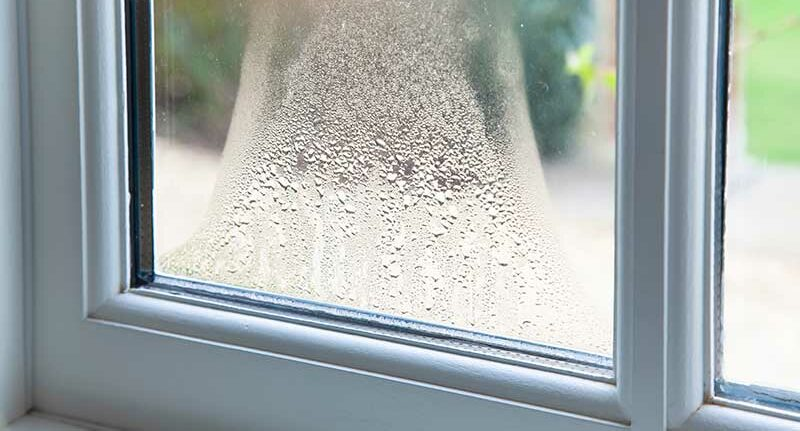
If you’re seeing multiple signs together, it’s usually time to move beyond cosmetic patching and address airflow, materials, and detailing as one plan.
7. When to Consider a Humidity-Smart Kitchen Remodel
A remodel becomes the smart move when:
- Cabinets show long-term swelling, warping, or rot (especially sink bases)
- Mold keeps returning after cleaning
- The layout traps moisture and lacks effective exhaust
- Flooring, grout, and caulk fail faster than expected
- Materials were never designed for high-humidity environments
A humidity-optimized kitchen remodel can extend the life of your kitchen dramatically—while also improving storage and function. If you’re also weighing timeline expectations, read: kitchen remodel timeline.
Final Thoughts
Humidity is unavoidable in The Woodlands—but the damage it causes in kitchens is preventable. With better moisture removal, smarter material choices, and routine sealing/inspection, your kitchen can stay stronger, cleaner, and more reliable for years longer.
If you live in The Woodlands and suspect humidity is shortening your kitchen’s lifespan, we’re happy to help you plan a humidity smart upgrade start with kitchen remodeling services in The Woodlands.
Looking for a Kitchen remodeling contractor in The Woodlands for planning, reach out to full home remodeling contractor in The Woodlands
Choosing the right contractor matters. Reach out to Remodeling contractors The Woodlands & nearby areas like Spring, Conroe, Tomball, and Magnolia.