

Introduction
In The Woodlands, your siding works overtime. Between persistent humidity, heavy seasonal rain, long sun-drenched summers, and sudden temperature swings, the wrong material can start showing trouble faster than most homeowners expect warping, peeling paint, soft spots, mildew staining, and moisture migrating into wall assemblies where it causes damage long before it's visible from the outside.
The good news is that the right siding material, installed correctly with proper moisture management details, performs exceptionally well in Southeast Texas conditions. The challenge is understanding what "right" means for your specific home, lot conditions, shading, and budget and knowing that material selection alone isn't enough without installation quality to back it up.
This guide breaks down the best siding options for humid climates, what to look for behind the panels (that's where most problems begin), installation details that protect your walls for the long run, and a maintenance framework that extends the life of whichever material you choose. If you are planning a full exterior refresh, start here: exterior remodeling services for The Woodlands.
If you are comparing multiple exterior upgrades together siding, trim, windows, and doors, it can be helpful to review real exterior renovation examples. Projects like the Harmony exterior renovation project and the Benders Landing siding and exterior project show how coordinated upgrades can dramatically improve curb appeal, weather protection, and long-term durability for homes in The Woodlands area.
Why Humidity Matters for Siding
Humidity is not just "sticky air." For your home's exterior, it represents constant moisture pressure on every joint, seam, penetration, and material boundary in your wall assembly. In a place like The Woodlands—where average relative humidity regularly exceeds 70–80% and summer rain events can be intense—moisture can move into tiny gaps, sit behind siding panels after storms, and create conditions for mold, rot, and structural damage if the wall cannot dry out properly between events.
What makes The Woodlands particularly demanding for siding is the combination of factors: high humidity, significant tree coverage that keeps walls shaded and slower to dry, heavy seasonal rainfall, and summer heat that drives moisture inward through thermal pressure. This isn't a climate where you can install any siding product and expect it to perform—material selection, installation details, and maintenance practices all matter more here than in drier regions.
Common humidity-related siding problems
- Moisture absorption: Materials that swell or soften when repeatedly wet and dry out will develop surface cracking, joint separation, and eventually structural softness over time.
- Mildew and mold staining: Persistent moisture combined with shade creates ideal conditions for biological growth—particularly on north-facing walls or beneath tree canopy where surfaces stay damp longer after rain.
- Rot and decay in hidden areas: Trim boards, sheathing edges, and the framing around window and door openings are the most common failure points when flashing is weak or missing. The damage is typically well established before it's visible from outside.
- Pest vulnerability: Moisture-damaged wood and wood-based materials are significantly more vulnerable to insects, including carpenter ants and termites, which are active in Southeast Texas.
- Paint failure: When moisture is trapped behind or within a siding material, paint bubbles, peels, and chalks at a much faster rate—creating an ongoing maintenance burden and eventually allowing deeper moisture penetration.
- Fastener corrosion: In high-humidity environments, inferior fasteners can rust and stain siding or lose holding strength over time. Stainless steel or hot-dipped galvanized fasteners are recommended for The Woodlands climate.
The most important concept in humid-climate siding is drying potential: your siding system must not only shed water and block wind-driven rain—it must also allow the wall assembly to dry when it does get wet. A system that keeps moisture out but traps any infiltration is only one heavy rain away from a hidden moisture problem. For a deeper look at climate-smart material selection across exterior and interior applications in Southeast Texas, read choosing the right materials for humid Texas weather.
Homeowners often spot the first signs of moisture issues as musty smells, discoloration near the base of walls, or soft spots in trim. For mold basics and prevention guidance, the U.S. EPA has a helpful overview: EPA mold resources.
Top Siding Materials for Humid Climates
There is no single "perfect" siding for every home in The Woodlands. The best choice depends on your budget, the amount of shade your house gets, your maintenance tolerance, your home's architectural style, and whether you want a modern, traditional, or premium exterior look. Below is a detailed breakdown of each main option with honest assessments of how each performs in humid Southeast Texas conditions.
1) Vinyl Siding
Vinyl is popular in humid regions because it does not rot, absorb moisture, or require painting—routine maintenance is limited to periodic cleaning. It can be an excellent value option when installed with proper water management details and quality products.
Modern vinyl siding products have improved substantially over earlier generations. Thicker profiles, better UV stabilizers, and more realistic textures have addressed many of the performance and aesthetic criticisms that older vinyl products earned. In The Woodlands, vinyl performs best on homes with strong sun exposure on the siding elevation—heavy shade creates cleaning demands, and moss or algae can establish on surfaces that stay damp. For shaded north-facing elevations, fiber cement may outperform vinyl without the cleaning burden.
Best for:
- Budget-conscious exterior refresh where cost control is the primary driver
- Homeowners who want low routine maintenance without painting cycles
- Homes where the wall assembly already has strong moisture control and good sun exposure
- Rental or investment properties where long-term aesthetics are less critical than durability and cost
Watch-outs in humidity:
- Installation must avoid trapping water behind panels—flashing at windows, doors, and penetrations is critical and cannot be shortcut.
- Heat and direct sun can cause thermal expansion and movement; proper fastening with allowance for movement prevents buckling.
- Lower-grade products fade more visibly over time; mid-to-upper grade vinyl is worth the modest premium in Texas sun exposure.
If you are planning broader curb-appeal improvements along with siding, see how to boost your home curb appeal in The Woodlands.
2) Fiber Cement Siding
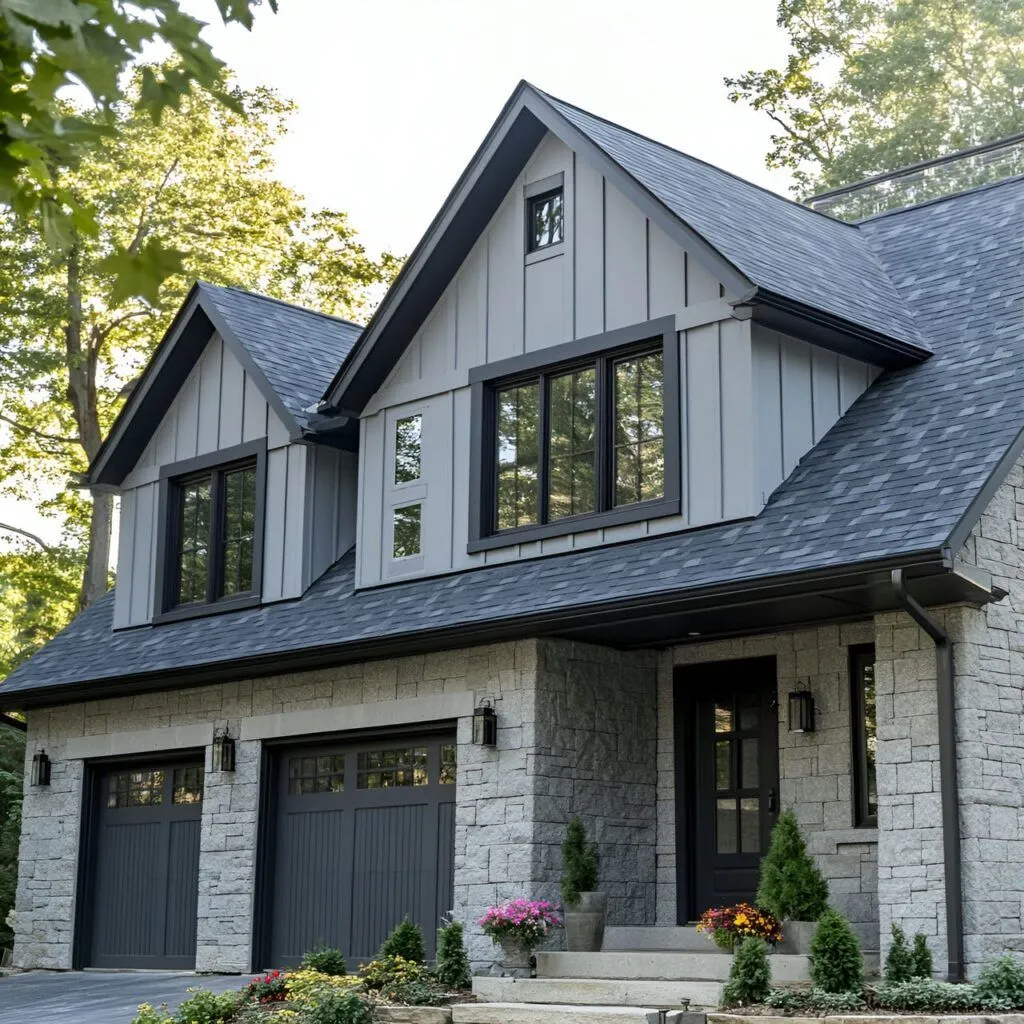
Fiber cement is widely considered the best overall performer for humid climates at a non-premium price point. It is dimensionally stable, pest-resistant, non-combustible, and holds paint exceptionally well when properly installed and maintained. In The Woodlands specifically, fiber cement's resistance to mildew staining—combined with its ability to hold a painted finish longer than wood-based materials in humid conditions—makes it a consistent top recommendation.
Fiber cement products are available in a wide range of profiles: lap siding, board-and-batten, shingle panels, and vertical plank. This makes it versatile enough to match almost any architectural style while delivering consistent moisture performance. The primary tradeoffs are weight (it is heavier than vinyl and requires a skilled crew), slightly higher material cost than vinyl, and a painting maintenance cycle—lower frequency than wood, but not zero.
Best for:
- Homes with significant shade where mildew resistance and drying performance matter most
- Homeowners who want a premium, long-lasting exterior with a wide range of profiles and finishes
- High curb-appeal renovations where dimensional stability and paint retention are priorities
- Homes where fire resistance is a consideration
Watch-outs in humidity:
- Weight requires a skilled crew; incorrect fastening, inadequate clearances, or poorly sealed cuts compromise performance.
- Factory-primed products still require finish painting and periodic touch-up; factory pre-painted options reduce but don't eliminate painting maintenance.
- End-cut sealing is critical—any field cut must be primed before installation to prevent moisture wicking into the substrate.

3) Engineered Wood Siding
Engineered wood delivers a warm, authentic wood look and feel that vinyl and fiber cement can approximate but not fully replicate. When installed with the right moisture barrier, flashing, and clearances, it offers better humidity performance than traditional natural wood while retaining the aesthetic character that many Woodlands homeowners prefer for traditional and transitional architectural styles.
The key differentiator from natural wood is the manufacturing process—engineered wood combines wood strands or fibers with resins under pressure, creating a more dimensionally stable product that is less prone to cupping, warping, or checking than solid lumber. However, it remains a wood-fiber-based product, which means moisture management details are not optional—they are essential. Homes with heavily shaded lots or consistently damp north-facing elevations require more diligent maintenance with engineered wood than with fiber cement or masonry.
Best for:
- Homeowners who strongly prefer a wood aesthetic that synthetic materials can't fully match
- Design-forward exterior projects where texture and natural warmth are priorities
- Projects with experienced crews who understand proper moisture management details for wood-fiber products
Watch-outs in humidity:
- All field cuts and edges must be sealed—this step is frequently skipped and is the most common cause of early failure.
- Clearances above grade, rooflines, and hard surfaces must be maintained; engineered wood sitting in contact with water or soil deteriorates faster than fiber cement in the same condition.
- Heavily shaded elevations may require more frequent cleaning and inspection than sunnier exposures.
If your home sits in a heavily shaded lot—common in The Woodlands—pair this option with a proactive maintenance plan from our guide: maintaining your new exterior.
4) Aluminum Siding
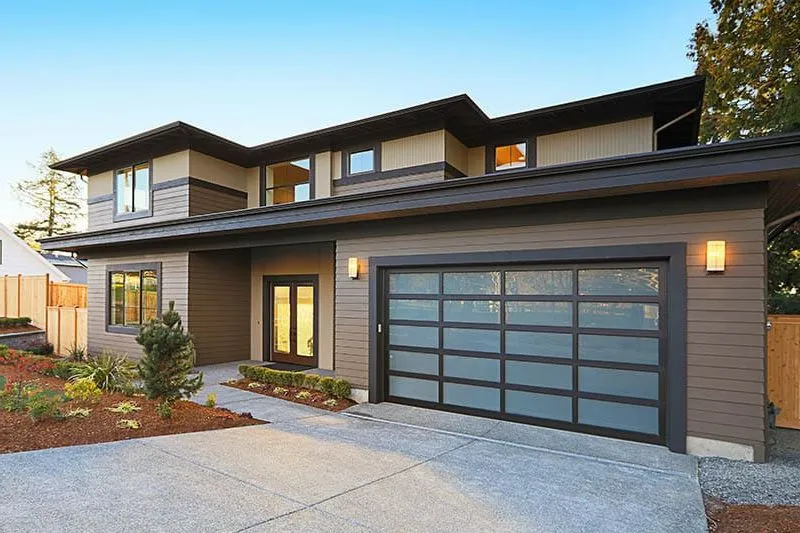
Aluminum is fully non-organic, meaning it will not rot, does not absorb moisture, and is completely immune to the pest vulnerabilities that affect wood-based materials. It can also reflect heat, which is a modest thermal benefit in hot Texas summers. While less common on new construction and full remodels than in previous decades, aluminum remains a smart option in specific applications—particularly on accessory structures, lower elevation accent areas, or homes where rot risk is the primary concern and aesthetic flexibility is less critical.
The main practical limitation of aluminum in The Woodlands is dent vulnerability—hail events, which are common in Southeast Texas, can leave visible surface damage on aluminum that doesn't affect vinyl or fiber cement panels in the same way. For primary elevations on homes in neighborhoods with active hail history, this is a meaningful consideration.
Best for:
- Homeowners who want a completely moisture-safe, non-organic exterior with no rot risk
- Specific elevations, accessory structures, or accent areas where impact risk is lower
- Projects prioritizing moisture immunity over aesthetics or impact resistance
Watch-outs in humidity:
- Dent vulnerability from hail and impacts—profile thickness matters; heavier gauges perform better.
- Paint finishes may require touch-up over time depending on sun exposure, and color options are more limited than other materials.
- Galvanic corrosion at fastener points if incorrect metals are in contact—use aluminum or stainless fasteners only.
5) Brick and Stone Veneer
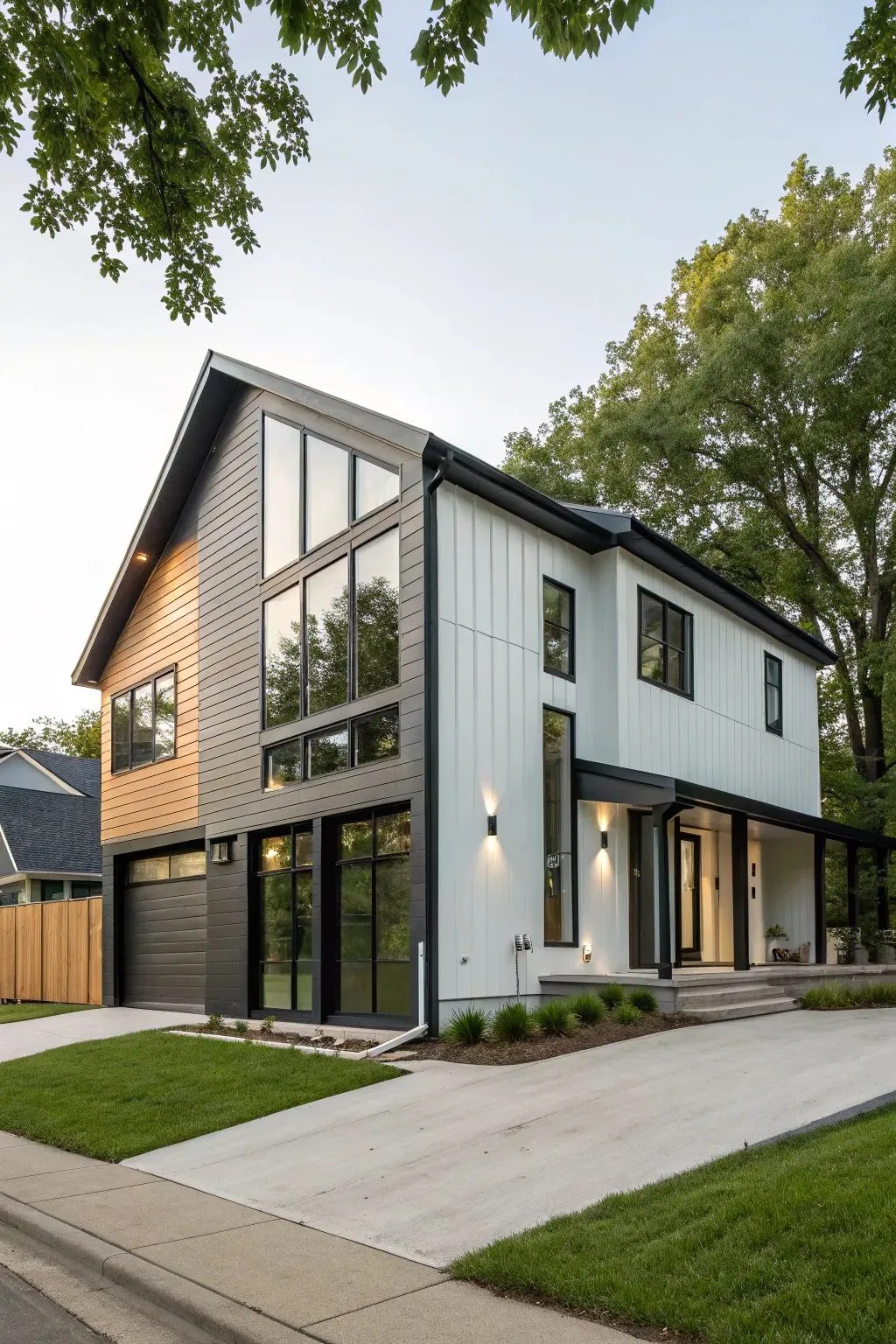
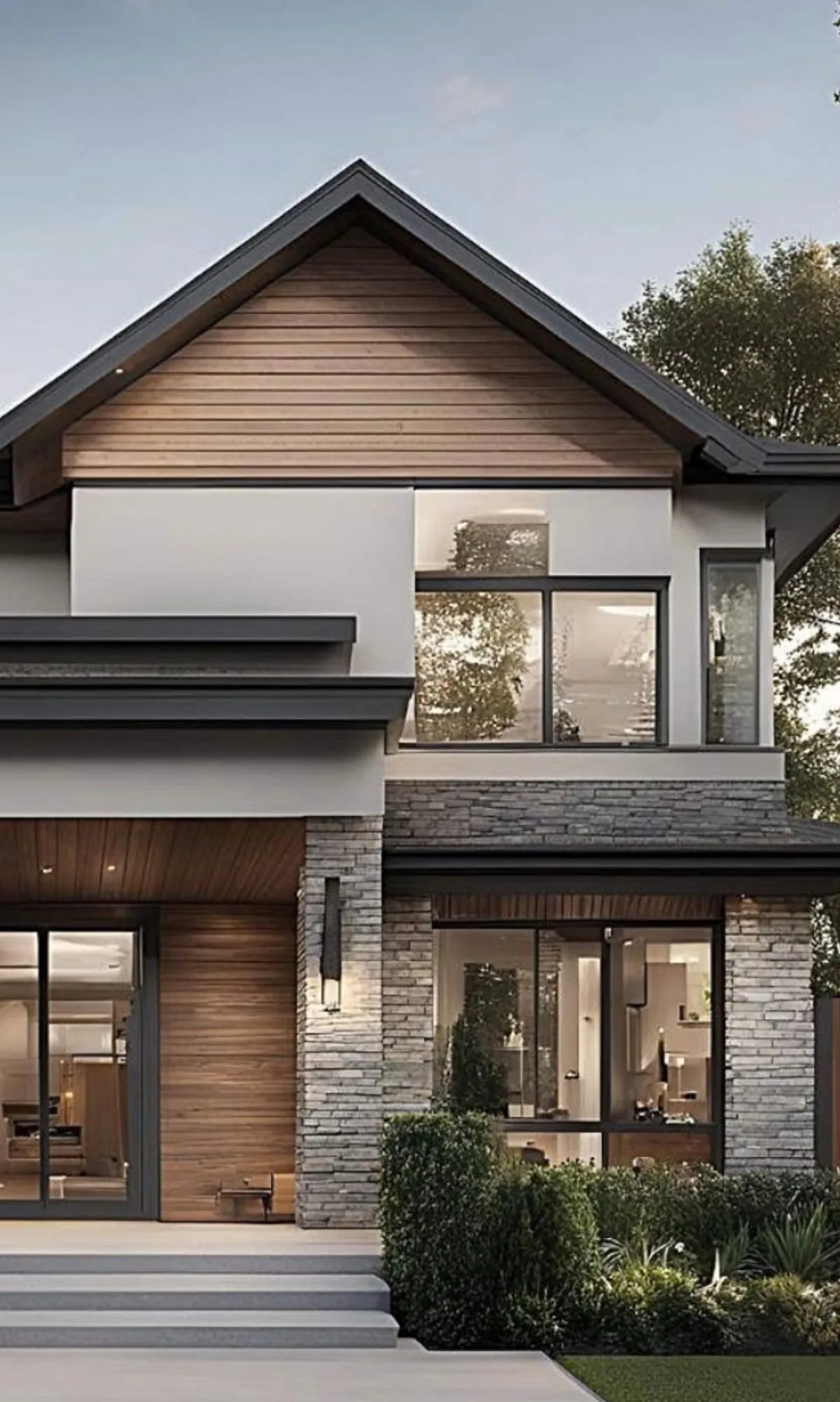
Brick and stone veneer represent the premium end of the siding spectrum—and for homeowners who can accommodate the higher upfront cost, they deliver among the best long-term performance and resale value of any exterior material in The Woodlands market. Both materials are non-organic, non-combustible, and dimensionally stable in humidity. Properly installed brick or stone veneer does not rot, does not require painting, resists insect damage, and maintains its appearance for decades with minimal intervention.
The critical performance factor with masonry veneer in humid climates is what happens behind the veneer: drainage, weep paths, and flashing must be correctly designed and installed. Masonry veneer that lacks proper drainage allows moisture to accumulate behind the facade and migrate into the wall assembly—negating the material's inherent moisture resistance. When done correctly, brick and stone veneer are among the most durable siding options available.
A good example of how moisture-resistant materials and proper drainage details come together is our Siding and Exterior Upgrade, where the exterior was rebuilt with humidity-safe assemblies, improved flashing, and long-term, low-maintenance materials designed for shaded, moisture-prone conditions.
Best for:
- Statement exteriors where premium curb appeal and long-term resale value are priorities
- High-durability, low-maintenance assemblies with a multi-decade performance horizon
- Accent walls, entryways, and lower elevations where visual impact and durability both matter
- Homeowners who want to eliminate painting cycles and periodic material replacement
Watch-outs in humidity:
- Correct drainage design behind the veneer is non-negotiable—weep courses, drainage mats, and flashing at all horizontal interruptions must be specified correctly.
- Mortar joints and any sealants at penetrations should be inspected periodically and repointed when cracking develops.
- Upfront cost is meaningfully higher than vinyl or lap siding—though total lifetime cost often compares more favorably when maintenance cycles are accounted for.
Side-by-Side Material Comparison
Choosing between siding materials is easier when the key performance dimensions are visible together. The table below summarizes how each option compares across the factors that matter most in The Woodlands' humid climate.
| Material | Moisture Resistance | Maintenance Level | Relative Cost | Best Scenario |
|---|---|---|---|---|
| Vinyl | Good (no rot; water can trap if improperly installed) | Low (cleaning only; no painting) | $ – $$ | Budget refresh; sunny elevations |
| Fiber Cement | Excellent (dimensionally stable; resists mildew) | Low–Medium (painting every 10–15 yrs) | $$ – $$$ | Shaded lots; premium durability |
| Engineered Wood | Good–Excellent (with proper sealing and detailing) | Medium (painting + inspection; edge sealing) | $$ – $$$ | Wood-aesthetic homes; skilled crew available |
| Aluminum | Excellent (fully non-organic; no rot risk) | Low (occasional finish touch-up) | $$ – $$$ | Moisture immunity priority; lower-impact zones |
| Brick / Stone Veneer | Excellent (with correct drainage installation) | Very Low (inspect joints periodically) | $$$–$$$$ | Premium durability; maximum curb appeal |
Use this as a starting framework, not a final decision. Your specific lot conditions, shading, home architecture, and budget will refine the best choice for your project. A site visit and professional assessment will always give you more accurate guidance than any general comparison. Many homeowners begin by consulting experienced remodeling contractors in The Woodlands, Texas who can evaluate the structure, materials, and environmental conditions before recommending the most practical solution for your home.
Key Factors to Consider When Choosing Siding
In humid climates, choosing siding is less about the brochure photo and more about how the system performs year after year under real conditions. Use these factors to narrow your options before making a final decision.
- Moisture resistance and drying potential: Materials should resist swelling, rot, and deterioration—and the wall assembly should allow drying when moisture does get in. A siding system that blocks water entry but traps any infiltration can be as problematic as one that lets moisture in freely.
- Shade and lot conditions: Heavily shaded lots with tree canopy create persistently damp surfaces that favor mildew growth and slow drying. Material choices that perform well in full-sun installations may require more maintenance on shaded north-facing elevations. Assess your specific lot conditions before choosing.
- Maintenance tolerance: Be realistic about how much maintenance you will actually perform. A material that requires bi-annual cleaning, periodic painting, and annual inspections will outperform a lower-maintenance option—but only if you follow through. Choose a material whose maintenance requirements match your actual habits, not your best intentions.
- Pest resistance: Southeast Texas has active termite and carpenter ant populations. Materials that eliminate pest vulnerability—fiber cement, vinyl, aluminum, masonry—reduce long-term risk compared to natural or wood-fiber products that are more susceptible when moisture compromises the surface.
- Impact resistance: Hail events are a real factor in The Woodlands area. Fiber cement and masonry veneer handle hail better than aluminum; vinyl performance varies by product thickness. If your home has hail history, discuss impact resistance specifically with your contractor.
- Heat and energy performance: Consider insulated siding assemblies, reflective surface properties, and the thermal performance of the wall overall. Some insulated vinyl and fiber cement products add meaningful R-value. For whole-wall guidance, the U.S. Department of Energy has practical insulation resources: DOE insulation guidance.
- Architecture and style fit: Lap, board-and-batten, shingle panel, and mixed material profiles each suit different home styles. The best-performing siding material in the wrong profile for your home's architecture creates a visual disconnect that affects curb appeal and resale.
- Cost vs. longevity: The least expensive option upfront may not be the most cost-effective over 15–20 years when maintenance cycles, earlier replacement, and repair costs are factored in. In The Woodlands' climate, under-specified siding fails earlier—and replacement costs more than a better initial specification would have.
If you are still weighing exterior options, browse what is trending locally in top exterior remodeling trends and see popular palettes in color trends for home exteriors.
Installation Tips for Humid Climates
In The Woodlands, installation quality is the difference between a siding system that lasts 25 years and one that develops moisture problems in five. Even the best siding material will fail if the water management system behind and around it is poorly designed or executed. Below are the most important installation details for humid climates.
Water-Resistive Barrier (WRB)
A quality house wrap or WRB is the first line of defense against wind-driven moisture infiltration. It must be installed continuously, lapped correctly (upper layers over lower layers), and integrated properly at all penetrations. Gaps, tears, or improperly lapped seams in the WRB are a primary source of hidden moisture damage that doesn't reveal itself until years after installation.
Flashing — The Most Critical Detail
More moisture damage in residential exteriors traces back to flashing failures than to any siding material failure. Every window, door, penetration (hose bibs, electrical, HVAC lines), roof-to-wall transition, and horizontal ledger detail must be flashed correctly—with proper material, correct lap sequence, and integration with the WRB. Flashing should be specified and reviewed before the project begins, not improvised during installation.
Drainage and Drying
Many modern siding systems benefit from a drainage gap or rainscreen detail between the siding and the WRB—a small air space that allows any moisture that penetrates the outer surface to drain down and out rather than accumulate against the WRB. In The Woodlands' climate, this detail meaningfully improves long-term wall drying performance, particularly on shaded elevations where drying is slower.
Humidity-Smart Installation Checklist
- WRB continuity: Inspect for gaps, tears, and improper laps before siding begins—these are impossible to correct after installation without removing siding.
- Flashing first: Windows, doors, penetrations, and transitions must be flashed before siding is installed around them, not after.
- Seal cuts properly: Any field cut in fiber cement or engineered wood must be primed or sealed before installation—unsealed end grain is a primary moisture entry point.
- Maintain clearances: Keep siding away from grade (typically 6 inches minimum), roof surfaces, decking, and hard horizontal surfaces to prevent moisture wicking at the base of walls.
- Correct fasteners: Use stainless steel or hot-dipped galvanized fasteners rated for the specific siding material—inferior fasteners corrode in humid conditions and leave rust staining or lose holding strength.
- Gutters and grading: Direct roof runoff away from siding and foundation with properly sized gutters, downspouts that extend away from the structure, and positive grading at grade level.
- Don't over-caulk: Use sealants where specified by the manufacturer, but avoid "caulking everything" as a substitute for proper flashing—trapped moisture behind caulk is a common problem, not a solution.
For homeowners planning any exterior work in Montgomery County, understanding local permitting basics is also important: permits and remodeling in Montgomery County.
Want a professional assessment for your specific home? Work with a local team that understands Woodlands humidity and exterior wall assemblies: remodeling contractors in The Woodlands.
Maintaining Siding in a Humid Climate
Even the best siding material installed perfectly will underperform without a consistent maintenance approach. In The Woodlands' humid conditions, a proactive maintenance routine is the difference between siding that looks great and performs well for 20+ years, and siding that starts showing wear and moisture-related problems in 7–10 years.
The following practices apply across all siding materials, with notes on what's material-specific.
Annual Inspection — What to Look For
- Caulk and sealant condition at openings: Check all window and door frames, penetrations, and transitions for cracking, shrinkage, or separating caulk. Reapply with a quality elastomeric product before water infiltration begins.
- Soft spots or discoloration at trim: Run your hand along windowsills, door casings, corner trim, and base trim. Soft or spongy areas indicate moisture has infiltrated—address immediately before damage spreads to sheathing or framing.
- Mildew or algae staining: Most visible on north-facing walls and under tree canopy. Surface staining alone isn't structural failure, but left unaddressed it can degrade paint systems and create conditions for deeper moisture issues.
- Clearance issues: Confirm that soil, mulch, and hardscaping haven't migrated up against the base of siding over the year. Restore 6-inch clearance from grade where needed.
- Gutter and downspout function: Clean gutters and confirm downspouts are directing water away from the foundation. Overflowing gutters deposit concentrated moisture directly onto siding below rooflines.
Cleaning Recommendations by Material
- Vinyl: Annual low-pressure washing with a mild detergent removes dirt, mildew staining, and oxidation. Avoid high-pressure washing that forces water behind panels at joints.
- Fiber cement: Low-pressure wash to remove surface dirt and mildew. Inspect paint system for any chalking, fading, or peeling—repaint when the paint system shows wear, typically every 10–15 years depending on sun exposure.
- Engineered wood: Similar to fiber cement; prioritize inspecting edge seals and any areas where caulk meets siding. Address paint failure quickly—exposed substrate is vulnerable to moisture absorption.
- Aluminum: Mild detergent wash; inspect for dents from hail events and touch up any compromised finish areas to prevent surface oxidation.
- Brick / stone veneer: Inspect mortar joints annually for cracking. Repoint with appropriate mortar when cracking develops. Check weep openings at the base of veneer to confirm they are clear and draining properly.
For a comprehensive exterior maintenance framework, read our guide: maintaining your new exterior.
Final Thoughts
Choosing the right siding material for humid climates like The Woodlands comes down to two things: material performance and moisture-smart installation. No material performs well in Southeast Texas humidity when installation details are wrong and conversely, even modest siding options can deliver excellent long-term service when the wall is detailed correctly and maintained consistently.
Vinyl can be a solid low-maintenance value for budget-conscious projects and sunny elevations. Fiber cement is the most reliable all-around performer for shaded lots and high durability goals. Engineered wood delivers authentic warmth when installation quality is high. Aluminum eliminates rot risk entirely in the right applications. And brick or stone veneer delivers premium longevity and curb appeal for homeowners whose budget allows the upfront investment.
Whatever material you choose, the priorities are consistent: a continuous water-resistive barrier, correct flashing at every opening and penetration, proper drainage details, and a maintenance routine that catches small issues before they become expensive ones. Siding that is installed with those fundamentals in place—regardless of material tier will outperform premium siding installed without them.
Ready to plan your siding upgrade? Start with exterior remodeling services in The Woodlands or reach us directly on our contact page.
If you're choosing a remodeling contractor in The Woodlands for planning, reach out to home remodeling & construction in The Woodlands .
Choosing the right contractor matters. Reach out to Remodeling contractors The Woodlands & nearby areas like Spring, Conroe, Tomball, and Magnolia.